
Bell County Most Wanted Sources
Start with the Bell County Crime Stoppers wanted page. It runs rotating wanted cards and feeds what you report into an official tip process. Expect agency labels, charges, descriptors, tip instructions, and sometimes case details or a reward offer. Some cards come from Bell County itself. Others come from a city agency like Killeen Police. In short, it is a collection of tip requests rather than a sheriff's list of every open warrant. A second source is the Bell County Most Wanted poster from the Community Supervision and Corrections Department. This PDF has a fixed, finite roster with descriptors, cause numbers, charges, and contact directions. It is dated, and that date matters. An old poster can sit online long after the live cards have changed, so read both together rather than one alone. The photo cards themselves stay on the official Crime Stoppers site. They are not copied into any gallery here.
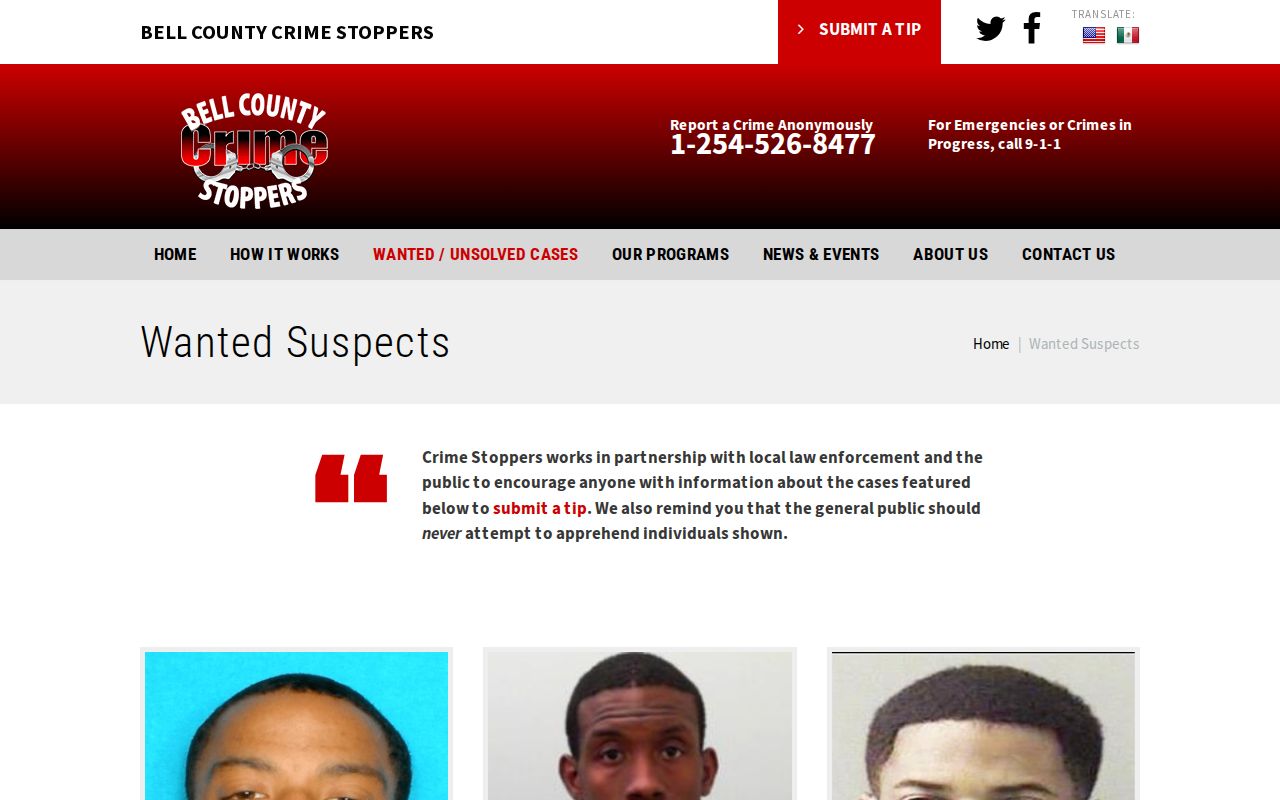
Always check the live page before trusting a listing. A screenshot only freezes what the interface looked like on one day, and wanted lists move fast.
Bell County Wanted Listing Fields
A wanted card and a booking record answer different questions. The card asks you for information. A county inquiry, by contrast, records a booking that has already happened. Stick to the fields the official listing actually provides. An address or last-known area is a data point, not a tool for tracking anyone down.
| Listing field | What it means |
|---|---|
| Name and photo | The identity information displayed by the source at the time checked. |
| Agency | The agency connected to the tip request, which may be a city or county agency. |
| Charge or warrant basis | An charge or source label, not a court finding. |
| Case or cause number | A possible bridge for an official court inquiry when present. |
| Reward and tip details | Source-provided terms that can change or may not apply to every card. |
The poster adds a few extras. Each name comes with physical descriptors and a cause number. Those details serve one narrow job. They identify a person inside the official document. Public listings can go stale, so never stretch them past what the source itself says.
Use Bell County Wanted Lists Safely
Read these lists as a public-safety resource. Nothing more. Crime Stoppers accepts anonymous tips and warns plainly against trying to apprehend anyone yourself. If something dangerous is happening right now, call 911. Otherwise, use the official tip line or the law-enforcement contact the source gives you. Do not approach, follow, or contact a listed person, and do not post directions to where one might be.
- Open the official Crime Stoppers card or current dated poster.
- Read the listed agency, case detail, and tip instructions without assuming a court outcome.
- Submit a non-emergency tip through the official anonymous channel if it is appropriate.
- Use 911 for an emergency or immediate sighting.
- After a reported arrest, use the Bell County booking record search to check whether an official booking record later appears.
Keep the tool matched to the job. Crime Stoppers is a tip system, not a custody page. A card can disappear with no explanation. And someone can show up in booking records without ever appearing on a wanted list. The live source is the only authority on whether a card is still active.
Bell County Crime Stoppers Tips
Bell County Crime Stoppers offers three official ways to report: phone 254-526-8477, an online form, and a mobile link. Tips can be anonymous. Qualifying information may earn a cash reward. Emergencies still belong with 911, and the service warns against any attempt at apprehension. Reward terms and submission methods can change, so confirm both on the live page.
A tip line has limits worth knowing. It is not a private warrant check, a custody confirmation, a legal advice line, or a way to request a booking photo. Send law-enforcement information only. Whatever you submit gets handled under that service's own terms.
Check Bell County Warrant Status
Bell County has no verified public warrant search covering the whole county. The jail's TCIC and NCIC checks exist for law enforcement work. Nobody outside can query them. A name missing from a wanted card proves nothing. It proves nothing in a search result or a private site either. Name variations, sealed records, indexing gaps, and court level can all hide the answer.
- For a specific matter, start with Bell County Odyssey and the court handling the case.
- Use a cause or docket number from an official source if one is available.
- Contact the appropriate clerk or the sheriff’s current public contact route for a direct official answer.
- For a possible personal warrant, seek advice from counsel or contact the court to resolve the matter safely.
Skip the commercial lookup pages too. A public case search might surface a warrant-related event. That is never full confirmation. The court or agency handling the case is the only place that can answer for sure.
Bell County Warrant Record Types
Labels matter here. "Most wanted," "wanted poster," "tip request," "arrest warrant," and a court docket event are five different things. The Crime Stoppers cards are curated requests for information from the public. The CSCD document is a dated Most Wanted poster. The county roster, meanwhile, is a booking and custody record. Each one captures a different stage of a case.
| Record type | Official use | What it cannot establish |
|---|---|---|
| Crime Stoppers card | Current public tip request | A full county warrant inventory or conviction. |
| CSCD poster | Dated wanted publication with cause details | That every listed entry remains current today. |
| County booking inquiry | Booking and custody record after intake | That a person was on a wanted list before booking. |
| Odyssey docket | Court-event and case cross-check | A broad name-only warrant clearance. |
Let the source speak in its own words and dates. A cause number can tie a poster entry to a court inquiry, but a name-only match needs identity checks before you treat it as the same person and case.
Bell County Wanted After Booking
A wanted listing usually comes first. After an arrest, the county booking inquiry may show a booking number, the arresting agency, bond details, and sometimes a docket number. Custody status shifts too, so treat a current hold, an old booking, and a later court result as three separate facts rather than one story.
The county's booking record page covers this in full. It separates current custody from date-range bookings and points to Odyssey for what happens next in court. Trust those identifiers. An old social post, a private index, or a saved copy of a wanted card will not stay accurate.
Court records. A wanted card is one thread; the docket and the court clerk hold the rest of the case.
Bell County Court Warrant Boundaries
Odyssey helps once a wanted poster gives you a cause number. It cannot confirm warrants on its own. Dockets run late. Indexes have gaps. Name variations confuse results, and some matters stay restricted. Name-only searches are weakest of all when aliases or common names enter the picture. Court staff and current procedures decide what a search can actually answer.
Limits matter most after a card disappears from Crime Stoppers. Was the warrant withdrawn, served, replaced, sealed, or never listed there at all? The missing entry says nothing. The booking inquiry might reveal a later arrest, but it cannot decode every change to a wanted card. Keep cards, booking records, and docket events sorted apart. Take case-specific questions to the official contact route or the court itself.
A cause number from the CSCD poster works as a cross-check. Nothing more. The poster may predate a hearing, a transfer, or some other docket event. When the court record gives no clear answer, resist filling the gap with a news story, a private publisher, or a social post. Know where the online source ends. Then ask the court or the record-holding agency.
Bell County Wanted Source Timing
Each local wanted source runs on its own clock. Crime Stoppers cards change quietly. Tips arrive, arrests happen, or agencies pull a listing. The CSCD PDF carries a date, and it may sit online even after a newer version exists. Skip the screenshot and the memorized headcount. The live card and the poster's own date tell you what is current.
Neither list follows a fixed schedule. Neither captures every warrant or holds a complete photo archive. The booking application and the court portal are separate systems with their own dates and fields, so keep them apart. That habit alone stops an old tip request from masquerading as fresh case information. When a card vanishes, only the source itself can say what caused the change. It might be an arrest, a tip, or an agency review.